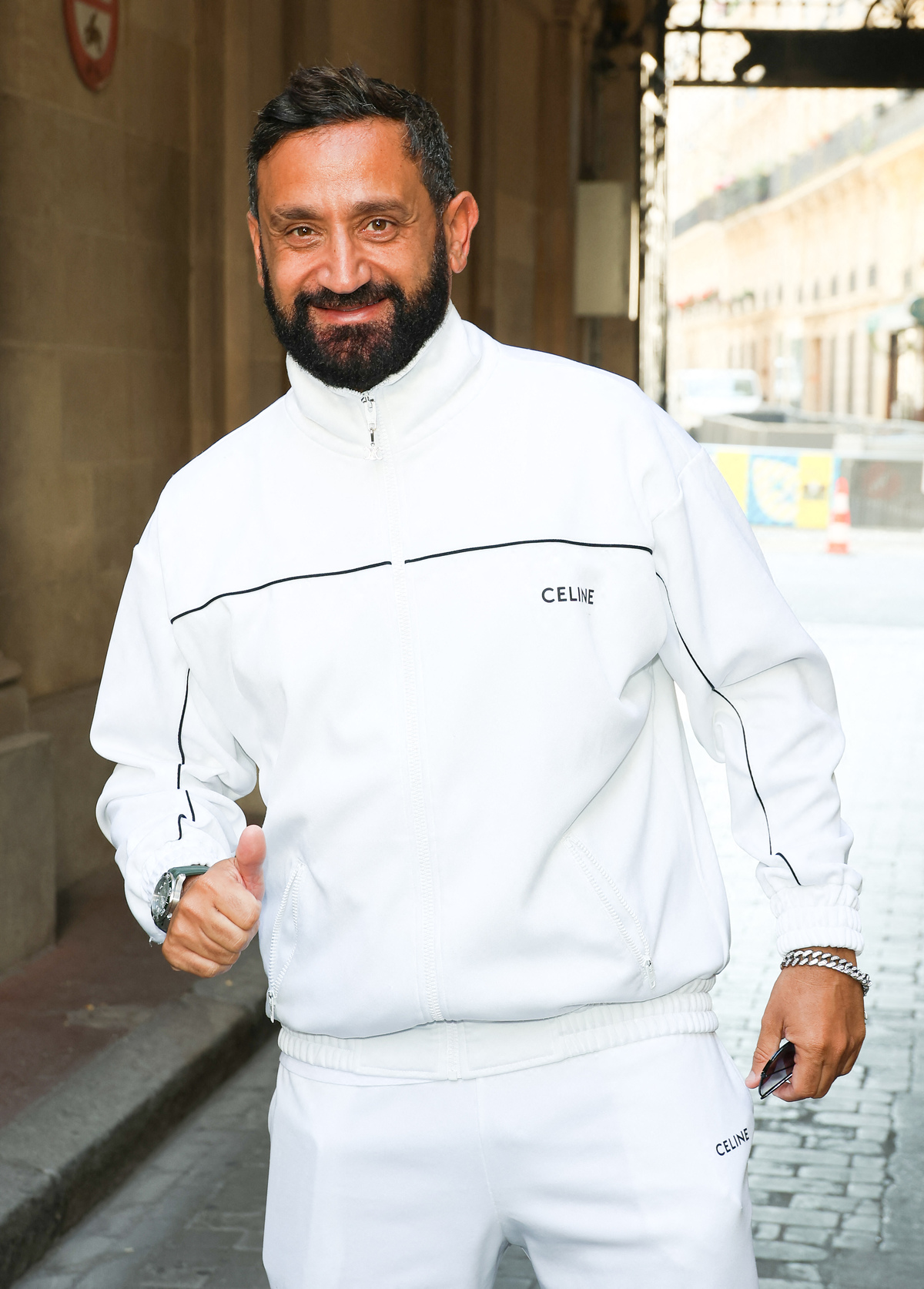
The Digital Agora: Cyril Hanouna, Parenting, and the TikTok Conversation
In the bustling digital landscape of today, few platforms capture public attention and ignite debate quite like TikTok. Known for its rapid-fire content and viral trends, it has also become an unlikely arena for serious discussions, ranging from social commentary to personal advice. Among the myriad topics that often trend, celebrity influence on everyday matters, particularly parenting, holds significant sway. One French media personality who consistently finds himself at the heart of these online dialogues is Cyril Hanouna. His often outspoken and direct style has led to numerous discussions surrounding his views, and recently, his perspective on children's upbringing has become a hot topic on TikTok, prompting many to ask: Quel Âge Ont Les Enfants De Cyril Hanouna?
This article delves into the phenomenon of celebrity parenting debates on social media, using Cyril Hanouna as a prime example. We'll explore why public figures' family lives become subjects of widespread discussion, the general themes that emerge from such debates, and how parents and viewers can critically engage with these digital dialogues.
The TikTok Effect: How Celebrity Parenting Becomes a Viral Debate
TikTok's algorithm thrives on engagement, often amplifying content that sparks strong opinions or widespread curiosity. When a figure like Cyril Hanouna, already known for his candidness and willingness to tackle sensitive subjects on traditional media, enters the realm of parenting discussions, it's almost guaranteed to create a stir. These debates on TikTok are often characterized by:
- Short-form clips: Snippets of interviews, show segments, or even Hanouna's personal anecdotes are shared, often out of context, leading to varied interpretations.
- Duet and Stitch features: Users react directly to Hanouna's clips, offering their agreement, disagreement, or personal experiences, thereby expanding the conversation exponentially.
- Hashtag trends: Specific hashtags emerge, aggregating discussions and making it easy for users to follow and contribute to the debate surrounding his views on education and family life.
This dynamic environment transforms celebrity parenting from a mere gossip item into a genuine public discourse. For many, a celebrity's stance on discipline, screen time, or educational philosophy isn't just about the individual; it becomes a proxy for broader societal debates on modern upbringing. The platform's accessibility means that anyone with an opinion can contribute, democratizing the discussion but also potentially leading to misinformation or overly simplistic takes on complex issues.
Cyril Hanouna's Persona and the Resonance of Parental Views
Cyril Hanouna's public image is one of a provocateur, an entertainer who isn't afraid to challenge norms and express strong opinions. This persona undoubtedly shapes how his views on parenting are received and discussed. When he shares an opinion on, for instance, traditional vs. modern discipline, or the appropriate age for children to engage with certain media, it's rarely met with indifference. His statements often polarize his audience, drawing both fervent support and passionate criticism.
The interest in Cyril Hanouna's Stance on Youth Education: A TikTok Perspective extends beyond mere curiosity; it taps into the very real anxieties and differing philosophies parents grapple with daily. Is he advocating for stricter boundaries or more freedom? Is his approach considered outdated or refreshingly traditional? These are the questions that fuel the TikTok commentary, as users project their own parenting ideals onto the discussion.
"Quel Âge Ont Les Enfants De Cyril Hanouna?": Curiosity, Context, and Parental Insights
One of the most frequently asked questions during these online discussions, especially among his followers, is "Quel Âge Ont Les Enfants De Cyril Hanouna?" This seemingly simple query holds more significance than just basic biographical curiosity. Understanding the age of a celebrity's children often provides a crucial context for their parenting philosophy.
For example, a parent discussing concerns about screen time might be viewed differently if their children are toddlers versus teenagers. Similarly, views on autonomy or exposure to pop culture content might logically shift as children grow older. Fans asking Quel Âge Ont Les Enfants De Cyril Hanouna are often seeking to understand the developmental stage of his children to better contextualize and perhaps even validate or critique his publicly expressed views on upbringing. While public figures naturally maintain a degree of privacy around their families, the general public's desire for this contextual information underscores the human tendency to relate personal experiences to broader advice.
However, it's important to remember that a parent's views are not solely dictated by the age of their children but also by their values, cultural background, and personal experiences. While knowing Quel Âge Ont Les Enfants De Cyril Hanouna might satisfy a superficial curiosity, the deeper discussion should always revolve around the principles and effectiveness of the parenting approaches themselves, rather than merely the demographic data of the children involved.
Navigating the Nuances of Modern Upbringing: Themes from TikTok Debates
The debates surrounding Cyril Hanouna's views, and celebrity parenting in general, tend to orbit around several core themes that resonate with a wide audience:
- Discipline and Authority: Are parents too lenient or too strict today? How much freedom should children have? These are timeless questions that celebrities often unintentionally bring to the forefront.
- Screen Time and Digital Literacy: In an increasingly digital world, managing children's exposure to screens, social media, and online content is a constant challenge. Debates on this topic are fierce, reflecting varied approaches from strict limits to guided integration. Hot topics, like discussions around certain cultural or social events aimed at youth (for example, the debate sparked by "un stage de drag queens annulé pour des enfants de 11 à 17 ans" which sometimes captures attention on TikTok regarding youth education), also contribute to these ongoing conversations about parental guidance and appropriate exposure.
- Education and Values: Discussions often touch upon schooling choices (public vs. private, traditional vs. alternative methods), as well as the values parents instill in their children, from respect and responsibility to resilience and open-mindedness.
- Parental Involvement vs. Fostering Independence: The fine line between being an engaged parent and allowing children to forge their own paths is a frequent point of contention. Celebrity examples often highlight the extremes, sparking broader discussion on balance.
These discussions, while sometimes fueled by sensationalism, often reflect genuine parental concerns and a collective search for effective strategies in raising well-adjusted children in a rapidly changing world.
Beyond the Buzz: Actionable Advice for Parents and Critical Engagement
While celebrity opinions can be engaging, it's crucial for parents to approach these online discussions with a critical eye. Here's some actionable advice:
For Parents Seeking Guidance:
- Develop Your Own Parenting Philosophy: Instead of blindly adopting celebrity advice, use these discussions as a springboard to reflect on your own values, your child's temperament, and your family's unique circumstances. There's no one-size-fits-all approach.
- Seek Diverse Sources: Supplement social media discussions with advice from pediatricians, child development experts, educational psychologists, and respected parenting books or reputable online resources.
- Prioritize Privacy: Consider the implications of sharing your children's lives online, even for educational purposes. Learn from celebrity experiences, both positive and negative, regarding their children's public exposure.
- Focus on Principles, Not Personalities: Instead of getting caught up in whether you agree with Cyril Hanouna specifically, evaluate the core principles he (or any public figure) espouses. Do those principles align with your family's goals?
For Viewers Engaging with Online Debates:
- Context is King: Remember that TikTok clips are often decontextualized. A 30-second video rarely captures the full nuance of a person's view.
- Question Sensationalism: Social media thrives on strong reactions. Be wary of content designed solely to provoke rather than inform.
- Embrace Nuance: Parenting is complex. Resist the urge to simplify debates into "right" or "wrong." There are often multiple valid approaches.
- Foster Respectful Dialogue: While debates can be passionate, strive for respectful engagement. Different parenting styles stem from different beliefs and experiences.
Ultimately, these online dialogues provide a platform for collective reflection on Beyond Ages: Exploring Cyril Hanouna's Involvement in Kids' Debates. They offer a unique lens through which to examine evolving societal norms around family, education, and the responsibilities of both parents and public figures.
The Enduring Impact of Digital Parenting Debates
The discussions sparked by figures like Cyril Hanouna on platforms like TikTok are more than fleeting trends; they contribute to the evolving tapestry of public discourse on parenting. They highlight the increasing role of social media in shaping opinions and disseminating information, for better or worse. By engaging critically and thoughtfully, both parents and general viewers can harness the power of these digital arenas to gain insights, challenge assumptions, and contribute to a richer understanding of what it means to raise children in the 21st century.
In conclusion, the online debates surrounding Cyril Hanouna's views on children's upbringing, fueled by curiosity around questions like "Quel Âge Ont Les Enfants De Cyril Hanouna?", exemplify the powerful intersection of celebrity, social media, and deeply personal topics. While these discussions can be polarizing, they also serve as a modern forum for collective reflection on parenting challenges and philosophies. The true value lies not in blindly following or rejecting celebrity opinions, but in using these conversations as a catalyst for informed, independent thought and a deeper understanding of the diverse approaches to raising the next generation.